










Choosing the right hosting is one of the most important decisions for any business website. Whether you’re launching a startup, running an eCommerce store, or managing a growing company site, your hosting directly impacts speed, security, uptime, and conversions.
Many businesses struggle to decide between Shared vs VPS vs Cloud Hosting, because each option offers different levels of performance, cost, and scalability. Selecting the wrong one can lead to slow loading speed, downtime, or unnecessary expenses.
This guide will help you clearly understand the difference between shared and VPS hosting, how cloud hosting compares, and which option is best for your business in India.
What is Web Hosting?
Web hosting is a service that stores your website data and makes it accessible on the internet. The type of hosting you choose determines how fast, secure, and scalable your website will be.
Why Choosing the Right Hosting Matters for Business
Before comparing hosting types, it’s important to understand why this decision matters.
- Website Speed Impacts User Experience & SEO
A slow website increases bounce rate and reduces conversions. Faster hosting improves rankings on Google and keeps users engaged. - Uptime Directly Affects Revenue
If your website goes down, you lose potential customers. Reliable hosting ensures your business stays online 24/7. - Scalability Supports Business Growth
As traffic increases, your hosting should handle more visitors without performance issues. - Security Protects Your Business Data
Secure hosting prevents hacking, malware attacks, and data loss.
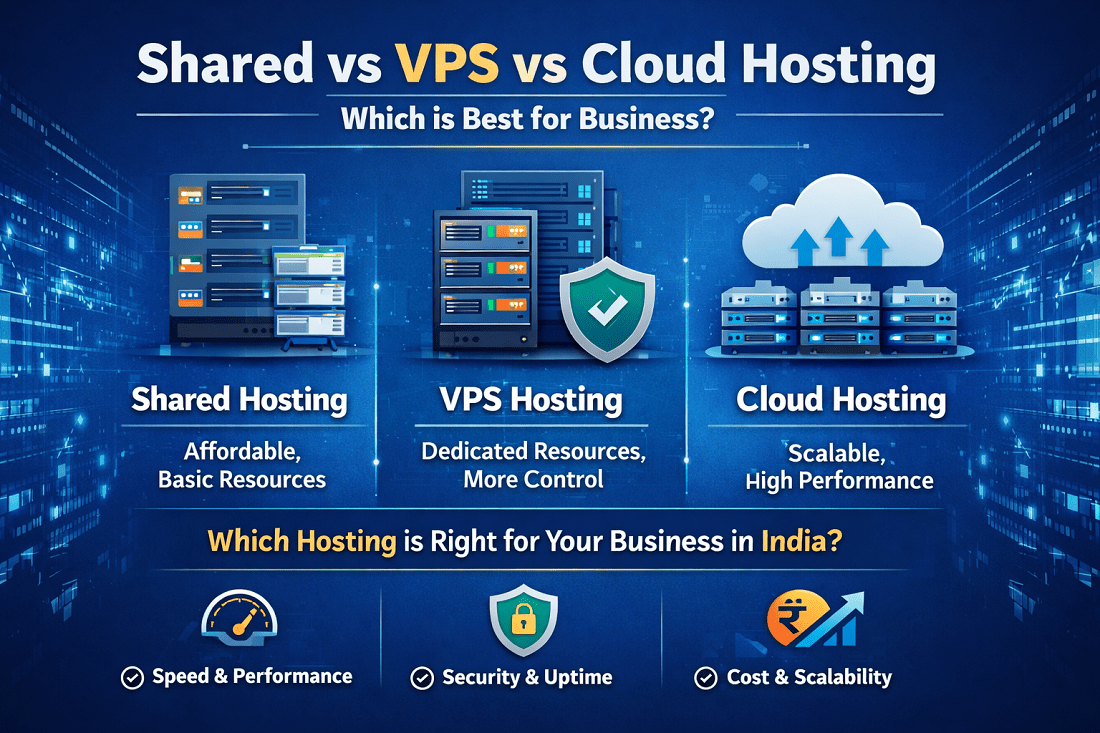
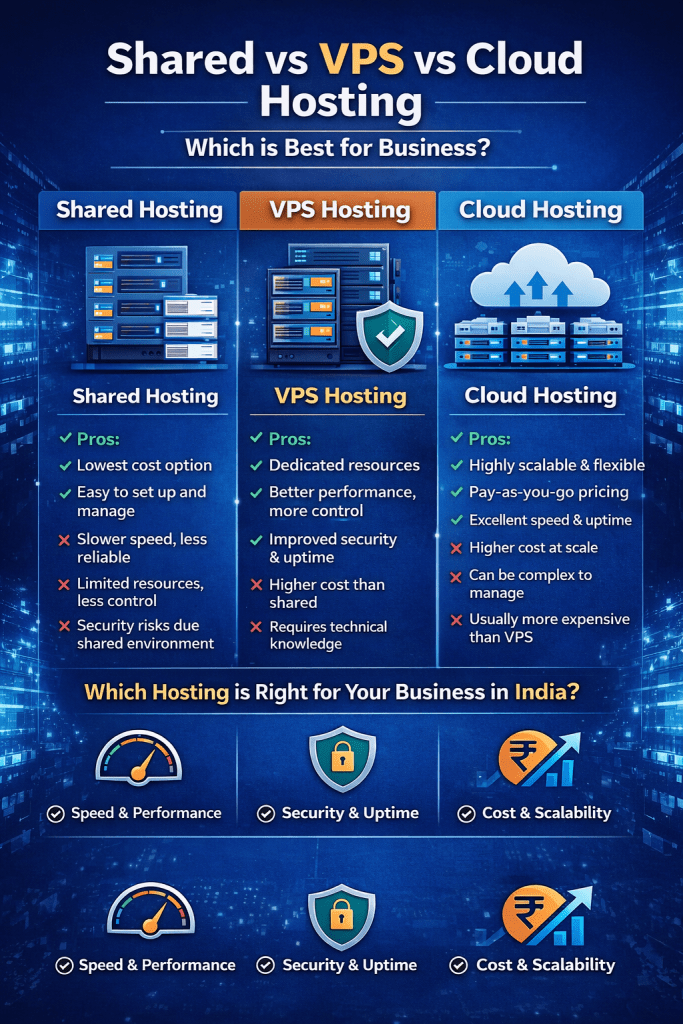
Shared vs VPS vs Cloud Hosting – Quick Overview
| Feature | Shared Hosting | VPS Hosting | Cloud Hosting |
| Performance | Low | High | Very High |
| Cost | Low | Medium | Flexible |
| Scalability | Limited | Moderate | High |
| Security | Basic | Strong | Advanced |
| Control | Limited | Full | Full |
| Best For | Beginners | Growing Businesses | High Traffic Websites |
Understanding the core difference between these hosting types will help you make the right choice.
What is Shared Hosting?
Shared hosting is the most basic and affordable type of hosting where multiple websites share the same server resources.
Key Features of Shared Hosting
- Low Cost Hosting Option for Beginners
Shared hosting is budget-friendly, making it ideal for small websites or beginners who are just starting online. - Easy to Use Without Technical Knowledge
Most providers offer user-friendly control panels, so you don’t need technical skills to manage your website. - Limited Performance and Resources
Since multiple websites share the same server, performance can slow down during high traffic periods.
What is VPS Hosting?
VPS (Virtual Private Server) hosting provides a dedicated portion of a server with allocated resources.
Key Features of VPS Hosting
- Dedicated Resources for Better Performance
Unlike shared hosting, VPS ensures your website gets fixed CPU, RAM, and storage, improving speed and reliability. - More Control and Customization
You can install applications, configure settings, and manage your server environment. - Ideal for Growing Businesses
VPS hosting is perfect for websites that have outgrown shared hosting and need better performance.
What is Cloud Hosting?
Cloud hosting uses multiple servers to host your website, ensuring high availability and scalability.
Key Features of Cloud Hosting
- High Uptime and Reliability
Your website is hosted on multiple servers, so if one fails, another takes over instantly. - Scalable Resources on Demand
You can increase or decrease resources based on traffic without downtime. - Best for High-Traffic and Dynamic Websites
Cloud hosting is ideal for large businesses, SaaS platforms, and eCommerce stores.
Difference Between Shared and VPS Hosting
Understanding the difference between shared and VPS hosting is crucial for choosing the right plan.
- Resource Allocation
Shared hosting distributes resources among many users, while VPS provides dedicated resources for better performance. - Performance Stability
VPS hosting delivers consistent performance, while shared hosting can slow down due to other websites. - Security Level
VPS offers better isolation, reducing the risk of security issues caused by other users. - Control and Flexibility
VPS allows full server control, while shared hosting has limited customization options.
Cloud Hosting vs VPS Hosting India
When comparing cloud hosting vs VPS hosting India, both offer strong performance, but they serve different needs.
- Scalability
Cloud hosting scales instantly based on demand, while VPS requires manual upgrades. - Reliability
Cloud hosting offers higher uptime due to multiple servers, while VPS depends on a single server. - Cost Structure
VPS has fixed pricing, while cloud hosting follows a pay-as-you-use model. - Best Use Case
VPS is ideal for medium-sized businesses, while cloud hosting suits high-traffic or enterprise-level websites.
Which Hosting is Best for Small Business in India?
Choosing the best hosting for small business India depends on your budget, traffic, and technical requirements.
- For Beginners or Low Traffic Websites
Shared hosting is suitable for small websites with minimal traffic and basic requirements. - For Growing Businesses
VPS hosting is the best choice for businesses that need better performance, security, and scalability. - For High Traffic or Scaling Startups
Cloud hosting is ideal for businesses expecting rapid growth or fluctuating traffic.
Hosting Comparison India – Which One Should You Choose?
Before selecting a hosting type, consider your business needs carefully.
- Budget Consideration
If budget is limited, start with shared hosting. However, investing in VPS can deliver better long-term value. - Website Traffic Expectations
Choose VPS or cloud hosting if you expect moderate to high traffic. - Technical Expertise
Shared hosting is beginner-friendly, while VPS and cloud may require technical knowledge unless managed. - Business Goals
If your goal is growth and scalability, VPS or cloud hosting is a better choice.
Best Hosting for Startups in India
Startups need a balance of affordability and performance.
- Start with VPS Hosting for Stability
VPS provides better speed and reliability than shared hosting, making it ideal for startups. - Upgrade to Cloud Hosting When Scaling
As your business grows, cloud hosting offers flexibility and scalability. - Choose India-Based Hosting Providers
Selecting a hosting provider in Delhi NCR ensures better speed and lower latency for Indian users.
Common Mistakes to Avoid When Choosing Hosting
Many businesses make mistakes while selecting hosting, which affects performance and growth.
- Choosing Only Based on Price
Cheap hosting may compromise performance and security. - Ignoring Future Scalability
Your hosting should support business growth without frequent migrations. - Not Checking Uptime Guarantee
Always choose providers offering at least 99.9% uptime. - Overlooking Customer Support
Reliable support is essential for resolving issues quickly.
Expert Suggestions for Choosing the Right Hosting
Making the right decision requires a practical approach.
- Start with Your Current Needs
Choose hosting based on your current traffic and business size. - Plan for Future Growth
Select a hosting provider that allows easy upgrades. - Focus on Performance and Security
Always prioritize speed, uptime, and security over low pricing. - Consider Local Hosting Providers
Hosting providers in India offer better performance for local users.
Conclusion
Choosing between Shared vs VPS vs Cloud Hosting depends on your business goals, budget, and technical requirements.
- Shared hosting is best for beginners and low-traffic websites
- VPS hosting is ideal for growing businesses
- Cloud hosting is perfect for high-traffic and scalable applications
For most businesses in India, VPS hosting offers the best balance of performance, cost, and scalability. As your business grows, upgrading to cloud hosting ensures long-term success.
Frequently Asked Questions (FAQs)
Shared hosting uses shared resources among multiple websites, while VPS hosting provides dedicated resources, resulting in better performance, security, and control for your website.
For small businesses, VPS hosting is usually the best option because it offers better speed, security, and scalability compared to shared hosting at a reasonable cost.
Cloud hosting is better for high traffic and scalability, while VPS hosting is more affordable and suitable for medium-sized businesses with stable traffic.
Yes, you can start with shared hosting and upgrade to VPS or cloud hosting as your website traffic and business requirements grow.
Shared hosting is the cheapest, VPS hosting has moderate pricing, and cloud hosting varies based on usage and scalability.
If you choose unmanaged VPS, technical knowledge is required. Managed VPS hosting eliminates the need for technical expertise.
VPS hosting is ideal for startups as it provides a balance of cost, performance, and scalability for growing businesses.
Yes, hosting impacts website speed, uptime, and user experience, which are important factors for SEO rankings.
Yes, choosing a hosting provider in Delhi NCR improves website speed and performance for users in India.
Cloud hosting or VPS hosting is best for eCommerce websites due to better performance, security, and scalability.
