







Security is no longer optional for websites. Whether you run a startup, an eCommerce store, or a service-based business, having an SSL certificate is essential for trust, SEO, and user safety.
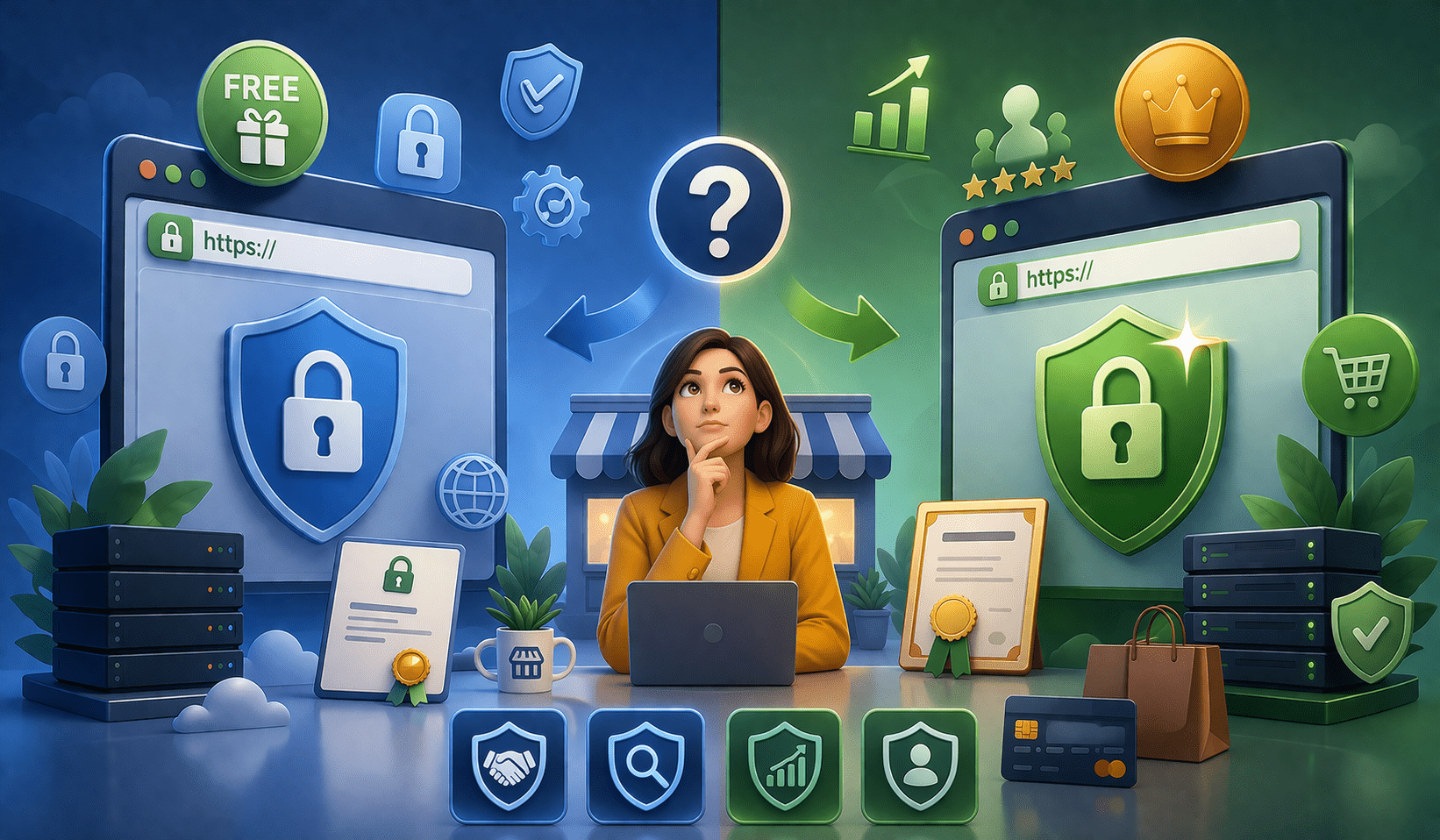
But one common question many business owners ask is: Should you choose Free SSL or Paid SSL?
Understanding the difference between free SSL vs paid SSL Certificate can help you make the right decision for your website and customers.
What is an SSL Certificate?
An SSL (Secure Sockets Layer) certificate encrypts the data transferred between your website and users. It ensures that sensitive information like passwords, payment details, and personal data remains secure.
When a website has SSL:
- It shows HTTPS in the URL
- Displays a padlock icon in the browser
- Builds trust with users
Why SSL is Important for Small Businesses
Before choosing between free or paid SSL, it’s important to understand why SSL is critical.
- Builds Trust with Visitors
Users are more likely to trust and interact with websites that show a secure connection. - Improves SEO Rankings
Google considers HTTPS as a ranking factor, helping your website perform better in search results. - Protects Sensitive Data
SSL encrypts user data, preventing hacking or data theft. - Essential for eCommerce Websites
If you accept payments online, SSL is mandatory for security compliance.
What is Free SSL?
Free SSL certificates are offered by providers like Let’s Encrypt and are commonly included with hosting services.
Key Features of Free SSL
- No Cost Involved
Free SSL certificates are completely free, making them ideal for startups and small websites. - Basic Encryption (Domain Validation)
They provide essential encryption but only verify domain ownership, not business identity. - Short Validity Period
Typically valid for 90 days, requiring frequent renewal (usually automated).
What is Paid SSL?
Paid SSL certificates are premium security solutions offered by trusted certificate authorities.
Key Features of Paid SSL
- Higher Validation Levels
Includes Domain Validation (DV), Organization Validation (OV), and Extended Validation (EV), which verify business identity. - Stronger Trust Signals
Paid SSL may display company details or a green address bar, increasing user confidence. - Warranty and Support
Comes with financial protection and technical support from the provider.
Free SSL vs Paid SSL – Key Differences
Understanding the real difference between free SSL vs paid SSL helps in making a practical decision.
| Feature | Free SSL | Paid SSL |
| Cost | Free | Paid |
| Validation | Domain Only | DV, OV, EV |
| Trust Level | Basic | High |
| Warranty | No | Yes |
| Support | Limited | Dedicated |
| Best For | Blogs, small sites | Business & eCommerce |
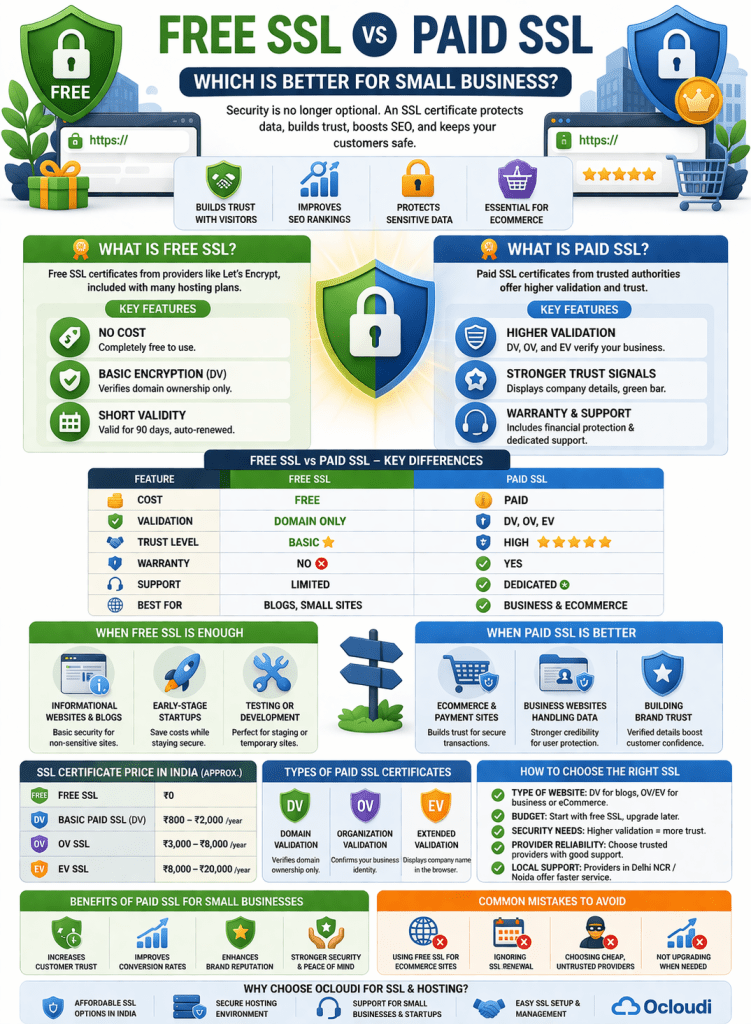
Free SSL vs Paid SSL – Which is Better for Small Business?
The answer depends on your business type, audience, and goals.
When Free SSL is Enough
- For Informational Websites and Blogs
If your website doesn’t collect sensitive data, free SSL provides sufficient security. - For Early-Stage Startups
Startups can use free SSL initially to reduce costs while maintaining basic security. - For Testing or Development Projects
Ideal for staging environments or temporary websites.
When Paid SSL is Better
- For eCommerce and Payment Websites
Paid SSL ensures higher trust and security for transactions. - For Business Websites Handling User Data
If you collect user information, paid SSL improves credibility. - For Building Brand Trust
Displaying verified business information increases user confidence.
SSL Certificate Price in India
Understanding SSL price in India helps you choose the right option.
Approximate Pricing:
- Free SSL: ₹0
- Basic Paid SSL (DV): ₹800 – ₹2000/year
- OV SSL: ₹3000 – ₹8000/year
- EV SSL: ₹8000 – ₹20000/year
Types of Paid SSL Certificates
Different SSL types serve different business needs.
Domain Validation (DV)
- Basic Security Level
Verifies domain ownership only, suitable for small websites.
Organization Validation (OV)
- Business Verification Included
Confirms your business identity, increasing trust.
Extended Validation (EV)
- Highest Trust Level
Displays company name in browser, ideal for large businesses and eCommerce.
How to Choose the Best SSL Certificate in India
Choosing the right SSL certificate for small business India requires careful consideration.
Key Factors to Consider
- Type of Website
Choose DV for blogs, OV/EV for business or eCommerce websites. - Budget
Start with free SSL and upgrade as your business grows. - Security Requirements
Higher validation provides stronger trust and protection. - Provider Reliability
Choose trusted providers offering good support. - Local Providers (Delhi NCR / Noida)
Selecting an SSL certificate provider in Delhi NCR or Noida ensures better support and faster service.
Benefits of Paid SSL for Small Businesses
- Increases Customer Trust
Users feel safer when they see verified business details. - Improves Conversion Rates
Secure websites encourage users to complete purchases. - Enhances Brand Reputation
Professional security builds long-term credibility.
Common Mistakes to Avoid
- Using Free SSL for eCommerce Sites
This can reduce trust and affect conversions. - Ignoring SSL Renewal
Expired SSL certificates can make your website inaccessible. - Choosing Cheap, Untrusted Providers
Always select reliable SSL providers for better security. - Not Upgrading When Needed
As your business grows, upgrade to higher-level SSL.
Why Choose Ocloudi for SSL and Hosting
For businesses looking for reliable solutions, Ocloudi provides:
- Affordable SSL Certificate Options in India
Suitable for startups and small businesses. - Secure Hosting Environment
Ensures your website runs safely with proper SSL integration. - Support for Small Businesses and Startups
Helps you choose the right SSL based on your needs.
Conclusion
Choosing between free SSL vs paid SSL depends on your business requirements.
- Free SSL is suitable for basic websites and startups
- Paid SSL is best for businesses handling data and transactions.
For small businesses aiming to build trust and increase conversions, investing in a paid SSL certificate is often the better long-term decision. With providers like Ocloudi, you can easily secure your website and grow your business confidently.
Frequently Asked Questions (FAQs)
Free SSL provides basic encryption and domain validation, while paid SSL offers higher validation levels, better trust indicators, warranty, and dedicated support for business websites.
Yes, free SSL is safe for basic websites and blogs. However, it lacks advanced validation and trust features required for business or eCommerce websites.
For small businesses, OV or DV paid SSL is recommended as it provides better trust, security, and customer confidence compared to free SSL.
SSL certificates in India range from free (Let’s Encrypt) to ₹20,000/year depending on the validation level and provider.
It is not recommended. Paid SSL is better for eCommerce as it improves trust and ensures secure transactions.
Yes, SSL improves SEO rankings as Google prioritizes secure (HTTPS) websites in search results.
You can purchase SSL certificates from trusted providers or hosting companies like Ocloudi, which offer integrated SSL solutions.
If SSL expires, your website may show security warnings, leading to loss of trust and traffic.
DV is basic, OV provides business validation, and EV offers the highest trust level. Choose based on your business needs.
Yes, SSL is essential for all websites to ensure security, improve SEO, and build user trust.
